

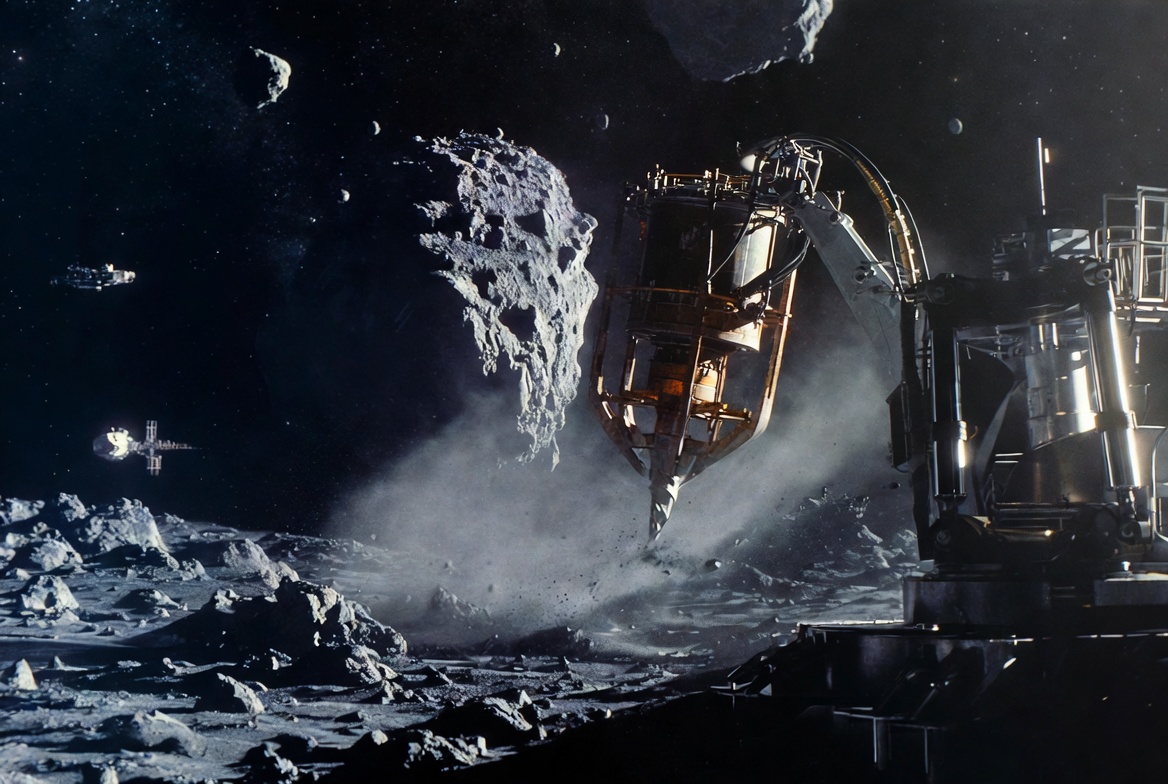
Introduction: A Personal Realisation After 15 Years in Mining
Throughout my career in the mining industry, one statement has been repeated almost religiously by seniors and mentors:
“Practical site experience is everything.”
But this is not true.
After spending nearly 15 years across mining operations, mine planning, and geotechnics, I have seen first-hand how site experience sharpens judgment, builds intuition, and develops strong operational leadership. Practical exposure teaches you what textbooks cannot—ground behaviour, equipment limitations, human factors, and the reality behind assumptions.
However, with time and reflection, I have arrived at a somewhat uncomfortable but important realisation:
If your goal is to manage mines better, practical experience is essential. But if your goal is to fundamentally transform mining, practical experience is not an important factor—and may even limit thinking.
This article is about that uncomfortable truth. Practical Experience: Necessary, but Not Sufficient
Let me be very clear at the outset.
Practical mining experience is extremely valuable if you want to:
- Become a strong operations manager
- Lead large production teams
- Optimise equipment utilisation
- Improve safety compliance
- Deliver production targets under real-world constraints
Most excellent mine managers are built on decades of site exposure.
But history tells us something equally important:
Most breakthrough innovations did NOT come from people deeply embedded in daily operations.
Instead, they came from:
- Researchers
- Scientists
- Cross-disciplinary engineers
- Outsiders who were not constrained by “how things are done at site”
This distinction is crucial.
Innovation vs. Optimisation: Mining Often Confuses the Two
The mining industry is very good at optimisation:
- Optimising blast designs
- Optimising haul routes
- Optimising slope angles
- Optimising manpower and equipment cycles
But optimisation is not the same as innovation.
Optimisation asks:
- How can we do the same thing slightly better?
Innovation asks:
- Why are we doing it this way at all?
- Is there an entirely different approach?
Unfortunately, traditional mining culture rewards optimisation far more than innovation.
The Traditional Mining Mindset: “Not Our Job”
A commonly heard statement in mining circles is:
“Our job is to extract minerals safely and efficiently. Thinking about what happens after resources are exhausted is not our responsibility.”
This mindset is deeply entrenched, especially among:
- Site-based mining engineers
- Production geologists
- Operations-focused professionals
Most practical mining professionals are consumed by:
- Daily targets
- Equipment availability
- Ground control issues
- Regulatory inspections
- Cost pressures
As a result, long-term existential questions are ignored:
- What happens when key minerals run out?
- What replaces them?
- How does mining evolve beyond Earth?
This is not negligence—it is systemic conditioning.
The Bigger Question: How Long Can Current Mining Sustain Us?
Let us step back from daily operations and look at the macro picture.
Based on tentative data from the U.S. Geological Survey (USGS) Mineral Commodity Summaries (2024), several critical minerals have finite reserve lives. While reserves are dynamic and influenced by exploration, price, and technology, the broad message is clear:
We are extracting non-renewable resources faster than ever before.
Approximate global reserve life estimates (indicative, not absolute):
- Iron ore: ~60–70 years
- Copper: ~40–50 years
- Bauxite: ~100+ years
- Zinc: ~25–30 years
- Nickel: ~40–50 years
Now pause and reflect.
The Iron Ore Thought Experiment
Iron is not just another mineral.
Iron is:
- The backbone of infrastructure
- Essential for construction
- Critical for manufacturing
- Central to defence, transport, and energy systems
Now ask a simple question:
What happens when iron ore reserves start declining significantly in 60–70 years?
Possible answers often given:
- Recycling will take care of it
- New deposits will be found
- Technology will save us
But these answers are incomplete.
Recycling alone is not enough
- Recycling requires existing stock
- Quality degrades over multiple cycles
- Growing populations demand more material, not less
Substitutes?
- No true substitute for iron exists at scale
- Aluminium, composites, or polymers cannot fully replace steel
Life as we know it today is impossible without iron.
Why Mining Engineers Rarely Think This Way
The uncomfortable truth is this:
The mining profession trains engineers to think locally and short-term, not globally and long-term.
Reasons include:
- Education focused on extraction techniques
- Career rewards linked to production metrics
- Limited exposure to interdisciplinary thinking
- Organisational silos between mining, materials science, and future technologies
As a result, most mining professionals:
- Solve today’s problems extremely well
- Avoid asking tomorrow’s uncomfortable questions
History Lesson: Where Do Big Ideas Actually Come From?
If we study the history of major technological revolutions, a pattern emerges.
Breakthrough ideas usually come from:
- People outside the core industry
- Individuals not bound by operational constraints
- Scientists and engineers willing to ask “impossible” questions
Mining is no exception.
Example 1: NASA and Asteroid Mining — A Non-Mining Organisation Thinking Ahead
NASA has no direct connection with commercial mining.
Yet, decades ago, NASA started asking a question that most mining companies never asked:
What happens when Earth’s resources become insufficient for long-term human survival?
Timeline of NASA’s Thinking on Space Resources
- 1980s: First conceptual discussions on asteroid resource utilisation
- 1990s: Detailed studies on near-Earth asteroids (NEAs)
- 2012: Funding for robotic asteroid prospectors
- 2013: Asteroid Redirect Mission proposed
- 2016: OSIRIS-REx launched to collect asteroid samples
- 2023: Samples successfully returned to Earth
- 2023: Psyche mission launched
- 2029: Psyche spacecraft to reach a metal-rich asteroid
Why Psyche Is Important
The Psyche asteroid is believed to contain:
- Massive quantities of iron
- Nickel
- Precious metals
In other words:
An entire metal-rich body floating in space.
NASA is not doing this for mining profits today—but for long-term survival and knowledge.
Example 2: Elon Musk — No Mining Background, Big Mining Implications
Elon Musk is:
- Not a mining engineer
- Not a geologist
- Not a metallurgist
Yet his vision of:
- A self-sustaining human colony on Mars
Automatically requires mining.
To build a city on Mars, humans will need:
- Metals
- Construction materials
- Energy minerals
- Water and oxygen extraction
Musk understands something fundamental:
You cannot become a multi-planetary species without becoming an off-Earth mining species.
One day, SpaceX rockets may not just carry satellites—but raw materials from asteroids.
Why Outsiders Think Differently
Outsiders are powerful because they:
- Are not limited by “industry norms”
- Do not carry operational baggage
- Ask naive but profound questions
- Combine ideas from unrelated fields
Mining professionals often say:
- “This won’t work at site”
- “Regulations won’t allow it”
- “We have always done it this way”
Outsiders ask:
- “Why not redesign the system entirely?”
- “Why must mining be Earth-bound?”
- “Why do humans go to mines instead of mines coming to humans?”
The Future of Mining Is Not Only Underground
Mining’s future lies in three dimensions, not one:
1. Deeper on Earth
- Ultra-deep mining
- Automation and robotics
- AI-driven geotechnics
- In-situ recovery techniques
2. Smarter on Earth
- Digital twins
- Remote sensing
- Real-time slope and ground monitoring
- ESG-driven design thinking
3. Beyond Earth
- Asteroid mining
- Lunar resource extraction
- Mars regolith processing
- Space-based manufacturing
This third dimension is where traditional mining thinking completely fails.
What This Means for Mining Professionals
This is not an argument against practical experience.
It is an argument against intellectual confinement.
Mining professionals must:
- Learn beyond mining textbooks
- Engage with space science, robotics, AI, and materials science
- Accept that future solutions may not come from mines or miners
A Call to the Mining Community
We need to ask ourselves some difficult questions:
- Should mining engineers start learning about space resources?
- Should mining curricula include planetary geology?
- Should mining companies collaborate with aerospace agencies?
- Should we stop saying “not our job” and start saying “our responsibility”?
Because one thing is certain:
If miners don’t think about the future of resources, someone else will—and they already are.
Conclusion: The Real Mining Problem
The biggest problem in mining today is not ore grade, slope stability, or cost.
The biggest problem is limited imagination.
The solutions to mining’s biggest challenges will not come only from:
- Sites
- Pits
- Underground workings
They will come from:
- Outsiders
- Cross-disciplinary thinkers
- People who dare to look beyond Earth
The future of mining is not just beneath our feet.
It is also above our heads.
Have any thoughts?
Share your reaction or leave a quick response — we’d love to hear what you think!
-
 0
0
-
 0
0
-
 0
0
-
 0
0
-
 0
0
-
 0
0