

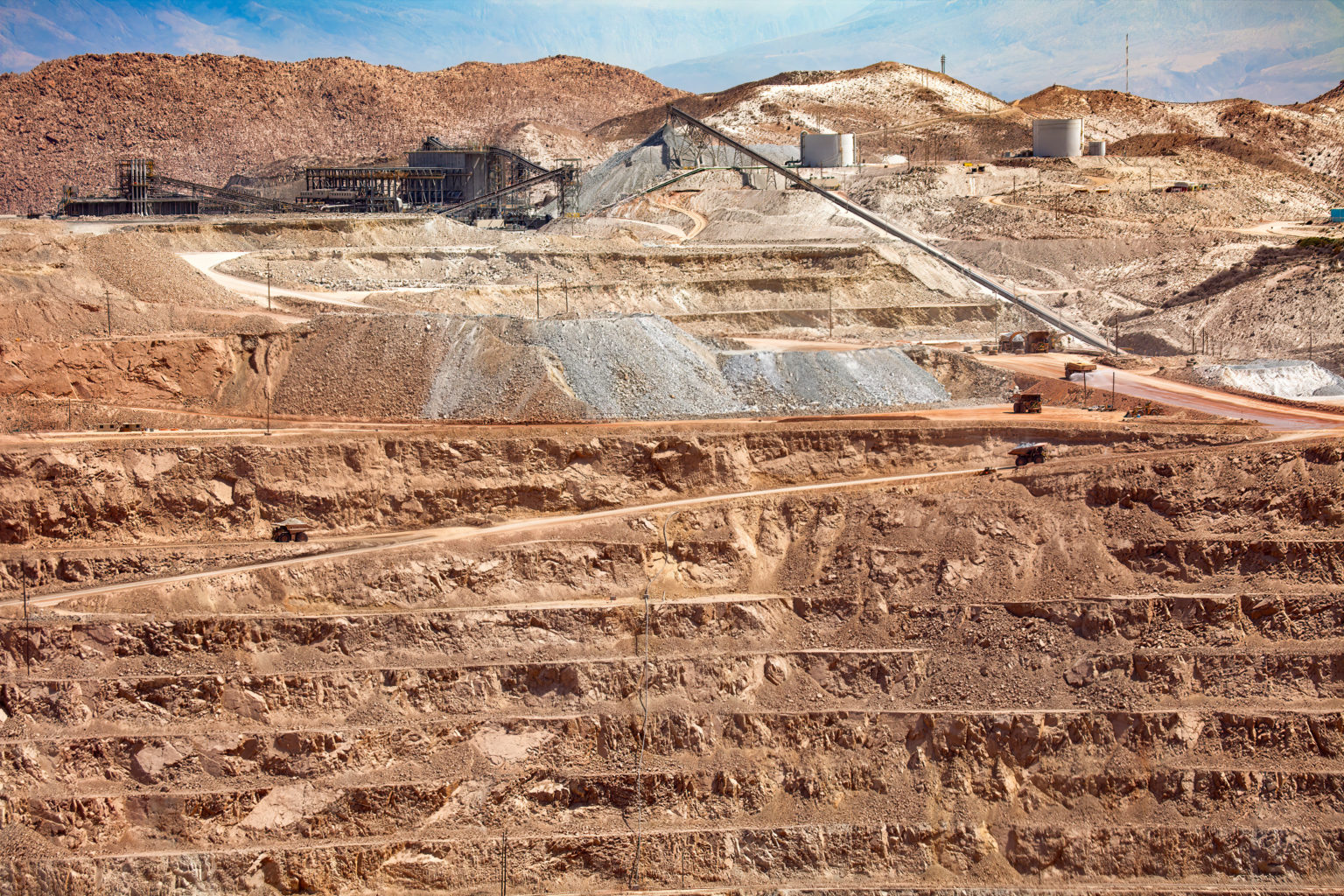
1. Labour reforms boost mining-sector workers’ rights.
Recent labour reforms in India have renewed hope for mine workers — long seen as bearing the harshest working conditions in the extractive economy. The unified labour framework brings in improved safety norms, formal contracts, regulated wages, and social-security provisions. While older mining operations often depended on informal labour, ad-hoc pay, and minimal protections, these regulatory updates aim to formalize the workforce, reduce workplace risk, and bring greater dignity to mining jobs.
Though data on scale is still emerging, the reforms mark a structural shift. For a sector that powers steel, infrastructure, and raw-material supply chains, a more stable and protected workforce could translate into better productivity, fewer stoppages, and more transparency. Over time, such stability might encourage more investments — both domestic and foreign — by reducing social risks associated with mining operations. For India’s mining future, this may be the bedrock for a more sustainable and responsible growth path.
2. Hidden gems rising: IMFA, Sandur Manganese & Ashapura Minechem gear up for mining super-cycle
According to a recent analysis by the Financial Express, three relatively under-the-radar Indian companies are aggressively scaling operations in anticipation of a mining boom.
- IMFA — a fully integrated ferrochrome company — achieved a record 701,863 tonnes of chromite-ore production in FY25. The Financial Express+1
- It operates its own captive mines (Sukinda and Mahagiri), captive power generation (204.5 MW + 4.5 MWp solar), and smelting complexes in Odisha (combined capacity 284,000 tpa). The Financial Express+1
- A greenfield ferrochrome plant at Kalinganagar (add 100,000 tpa) plus the acquisition of a legacy plant from Tata Steel (adding 150,000 tpa) will push IMFA’s capacity to 534,000 tpa — making it India’s largest ferrochrome producer, and among the top globally. The Financial Express+1
- IMFA’s export-oriented model is notable: 91.4% of its sales are international. The Financial Express+1
- Sandur Manganese — historically a merchant miner — is transforming into a value-chain player. Its approved mining capacity (MPAP) surged: iron-ore quota rose from 1.6 MTPA in FY23 to 4.45 MTPA currently. Manganese capacity also rose to ~0.599 MTPA. The Financial Express+1
- Recent acquisition of Arjas Steel (Tadipatri) gives Sandur downstream manufacturing capability (special-bar-quality steel), expanding steel capacity to ~0.585 MTPA. The Financial Express+1
- On the financial side: total income jumped ~336% YoY, with manganese ore, ferroalloys, and steel volumes increasing 335%, 137%, and 79% respectively. EBITDA rose 355%, PAT surged 334%. The Financial Express
- Ashapura Minechem — a major bauxite (and other minerals) player — is building port-handling capacity (from 16 MMT to 27 MMT), expanding logistics, mining, and export bandwidth globally (including operations in Guinea). The Financial Express+1
- Its diversification includes bentonite mines (Kutch — 300,000 tpa) and full-capacity kaolin/bleaching-clay plants, aiming to cater to high-value industries (paint, fiberglass, ceramics). The Financial Express+1
Collectively, these firms are laying down integrated supply chains — from ore to value-added products — positioning themselves to benefit from rising demand across steel, stainless steel, infrastructure, and global exports.
3. India’s mining players go global: Adani Group & Hindalco Industries eye Peru’s copper riches
As global demand for copper surges — driven by infrastructure, electrification, renewables, and manufacturing — Indian conglomerates are stepping up their sourcing strategies. Adani and Hindalco are reportedly exploring investment or acquisition of mining assets in Peru, one of the world’s largest copper-producing nations. Reuters+1
Peru produced approximately 2.7 million metric tonnes of copper in 2024 and attracted nearly US$5 billion in foreign investment in its mining sector. Reuters For India, which already relies heavily on imported copper concentrate, this move is strategic: securing overseas raw-material supply could hedge against global supply shocks, currency fluctuations, or export restrictions. Analysts estimate that by 2047, India might need to import as much as 91–97% of its copper concentrate to meet domestic demand. Reuters+1
The potential acquisition would not just ensure supply — it may also give Indian firms better visibility over costs, logistics, and timing. Given the current global crunch in critical metals (copper, lithium, etc.), such cross-border moves could become the norm rather than the exception.
4. Coal power gets an extension — Government of India considers coal-power expansion till 2047
Despite the global push towards renewables and decarbonization, India may continue to bank on coal for longer than anticipated. Reports indicate that the government is evaluating a plan to extend coal-power capacity additions for another 12 years — effectively allowing new coal plants to be built until at least 2047. Bloomberg
The rationale: with India’s power demand rising — driven by industrial growth, urbanisation, infrastructure and electrification — coal remains a stable, cost-effective backbone for baseload energy. The proposed expansion could push installed coal-based capacity significantly higher than current levels. While exact aggregate capacity targets are not publicly detailed yet, this shift signals that coal will remain central to India’s energy strategy for decades.
This development has layered implications: for energy security and developmental needs, coal offers reliability. But from an environmental and climate-change standpoint, extending coal dependence deep into the 2040s may raise tough questions — about emissions, air quality, and India’s long-term sustainability commitments.
5. Global iron-ore forecast: Vale sees floor at US$100/ton — what it means for Indian steel & mining
Brazil-based mining giant Vale recently forecast that global iron-ore prices will stabilize around US$100 per ton through 2026, citing supply constraints (natural depletion of deposits) and increasing demand from regions like India, Southeast Asia, and MENA, which are expanding steel and infrastructure output. ГМК+1
Interestingly, though Vale has trimmed its 2026 production forecast to 335–345 million tons (from earlier 340–360 million) — indicating tighter supply — the company plans to maintain iron-ore output and ramp up mid-grade and pellet-feed lines to meet demand. ГМК+1
For Indian steelmakers and mining companies, this outlook provides a cushion. If global prices stay firm near $100/t, domestic producers sourcing ore internationally — or those selling iron ore to global markets — may find margin cushions. Especially as India’s steel demand soars, and domestic ore quality or quantity may not suffice for certain grades.
6. Mining sector under pressure — social conflict as mining meets local resistance
Not all mining news is about growth or expansion. In a stark reminder, a coal-mining protest in Chhattisgarh turned violent, injuring more than 30 policemen. The protest was against the proposed expansion of the open-cast South Eastern Coalfields Limited (SECL) Amera mine, in the village of Parsodi Kala. The Indian Express+2Business Standard+2
Locals claimed that the land — agricultural and ancestral — was being taken away without sufficient consent or fair rehabilitation. Compensation had been paid in many cases, but several villagers rejected the amounts, citing inadequate or delayed benefits. The Indian Express+2India Today+2
When officials attempted to resume mining operations, villagers resisted; stone pelting and clashes with police ensued, with tear-gas and lathi-charge used. The episode reflects deep social tensions around land acquisition, resource rights, and environmental justice — issues that mining companies and regulators must handle carefully, especially in tribal or agrarian regions. The Indian Express+2mint+2
Such conflicts can delay or derail projects, increase costs, and negatively impact public perception — which today matters as much as ore quality or financials.
7. Crackdown on illegal minor-mineral mining — Odisha Government moves against unlawful practices
On the regulatory front, the Odisha Government has taken strong measures against illegal minor-mineral (sand, gravel, etc.) mining and transport. From 2022 to October 2025, authorities collected fines totalling ₹126.51 crore across the state, registered 3,219 cases, and made over 15,000 seizures. prameyanews.com+1
Eleven tehsils have been identified as hotspots for illegal mining and transportation. These include Dharmashala, Jharasuguda, Pipili, Tangi, Marshaghai, Barang, Kanihal, Jaleswar, Hindol, Purushottampur, and Raghunathpur — with certain areas seeing repeated offences. prameyanews.com+1
In policy updates, the state has also introduced a Minimum Support Price (MSP) for sand to control arbitrary pricing by leaseholders, and replaced e-auction mining leases with an e-lottery process — aiming to curb manipulation of leases and improve transparency. Storage licenses for mineral stockpiling will be mandatory, and unauthorized storage will be treated as illegal. prameyanews.com+1
This crackdown reflects a broader push to clean up the mining sector’s unregulated side: prevent resource theft, environmental degradation, and unfair market practices. For legitimate companies, it may level the playing field; for illegal operators, the crackdown signals a shrinking space.
8. Global supply dynamics: Iron-ore trends and implications for India
While demand from India and Asia remains robust, global iron-ore supply has been under pressure. As noted, Vale has lowered its 2026 production forecast. ГМК Meanwhile, global depletion of high-grade deposits and rising demand from developing countries have driven up the “break-even” price to around US$100/t. ГМК+1
Some analysts, however, caution of future price softening. Factors like increasing supply from newer mines (for instance, in Africa), a potential slowdown in China’s steel demand, or alternative materials could reduce pressure on ore prices. ГМК+2ГМК+2
For India, this tug-of-war between demand and supply underscores the importance of diversifying sourcing — domestic mining, captive mines, overseas acquisitions (like copper assets in Peru), and strategic stockpiling. The near-term stability near $100/t provides breathing room, but long-term resilience will depend on a diversified metals strategy.
9. What all this means for India — bigger picture & what to watch
Putting together the threads from labour reforms, rising mid-sized miners, international copper and iron-ore sourcing, regulatory crackdowns, and global commodity dynamics — a broader narrative emerges: India’s mining & metals sector is in transition.
- From commodity-driven extraction to integrated value chains: firms like IMFA, Sandur and Ashapura aren’t just mining ores — they are moving downstream (ferrochrome, steel, logistics, exports), reducing dependence on spot-market volatility.
- From local sourcing to global supply-chain management: strategic plays like Peruvian copper investment show Indian firms are thinking globally, ahead of raw-material crunches.
- From regulatory laxity to governance & compliance: crackdowns on illegal mining and stronger labour laws suggest that the sector is being re-normalized, with sustainability, legality and worker welfare becoming priority.
- From short-term cycles to long-term positioning: stable iron-ore price forecasts, capacity expansions, and power-sector decisions (including continued coal usage) indicate that companies are in for the long haul — not just the next boom.
But challenges remain. Social resistance (as seen in Chhattisgarh), environmental pressures, uncertainty in global demand (especially from China), and regulatory unpredictability (mineral, export, environmental laws) could derail even well-laid plans.
For investors, policymakers, and industry watchers — now is the time to watch which firms emerge as “end-to-end metal-ecosystem players”, which commodities (copper, bauxite, chrome, coal, iron) stay in demand, and how India balances growth with sustainability and social justice.
Have any thoughts?
Share your reaction or leave a quick response — we’d love to hear what you think!
-
 0
0
-
 0
0
-
 0
0
-
 0
0
-
 0
0
-
 0
0